


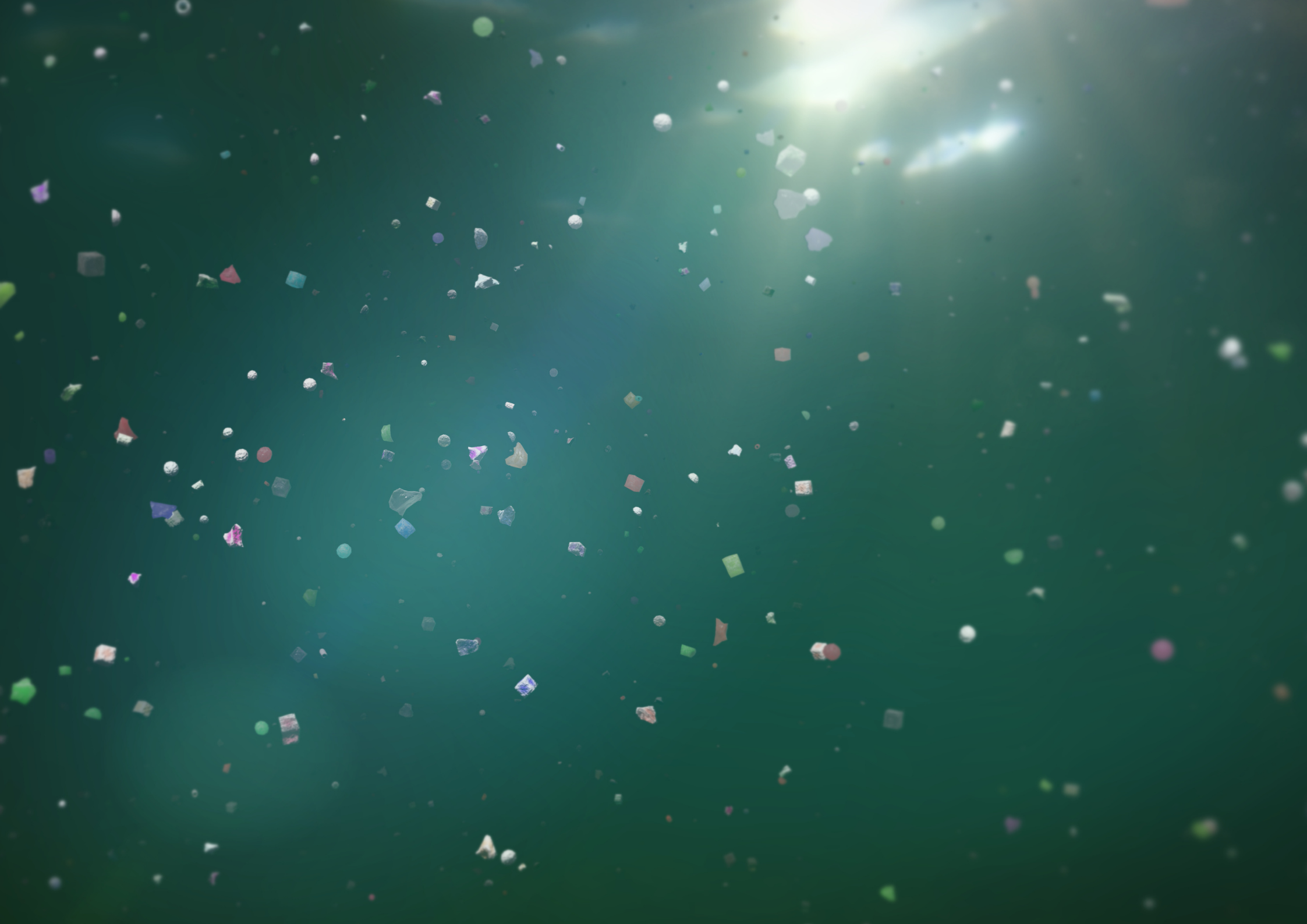
Microplastics are just what they sound like, they are tiny pieces of plastic that we find floating in our water, littering our beaches and even finding their way into our food sources. When plastic is not recycled it is usually disposed of in the trash. That trash goes to landfills or is dumped into the ocean. Fourteen billion pounds of trash are dumped into the ocean each year, much of it is plastic. Over time, plastic starts to break down and because it is not biodegradable, eventually it cannot be broken down any further. Small pieces of plastic debris, less than five millimeters, are left and those are called microplastics. Despite being so small, microplastics cause big problems.

Where Do Microplastics Come From?
Microplastics can either be from large pieces of plastic that have broken down over time or they can be created as microplastics. These tiny plastic fragments, often invisible to the naked eye, can come from various sources such as microbeads in personal care products, synthetic fibers from clothing, and the breakdown of larger plastic items. It is important to understand the impact of microplastics on human health and the environment.
What is the Biggest Source of Microplastics?
The first source of microplastics come from large single-use plastics, like plastic bags, plastic bottles, toothbrushes, toys and anything else made of plastic that breaks down over time. This includes types of plastic packaging as well. Most plastic items are not biodegradable, so when they are thrown in the trash they get smaller and smaller over time. But these small pieces do not just disappear. They continue to exist and float around in our waterways.
Microbeads are tiny plastic particles found in various personal care products, such as face washes and toothpaste, to provide exfoliation or texture. These minuscule and colorful beads contribute to the grainy feel of the products. However, the concerning issue arises when these plastic microbeads are washed down the drain, eventually making their way into water bodies like the ocean. Once in marine environments, microbeads pose a significant threat to aquatic life and ecosystems due to their non-biodegradable nature.
To combat this environmental hazard, many countries have banned the use of microbeads in personal care products. Consumers are encouraged to choose products that are labeled as "microbead-free" or opt for natural exfoliants like sugar or salt. By being mindful of the ingredients in everyday products, individuals can play a role in reducing plastic pollution and protecting marine biodiversity from the harmful effects of microplastics.
Why Are Microplastics Bad?
The size of microplastics makes them very difficult to be seen and properly cleaned up, so they continue floating around in bodies of water. Aquatic organisms, such as marine organisms, often mistake microplastics for food. Plastic consumption is harmful for an animal’s digestive system and overall health. The presence of microplastics in the ocean disrupt our aquatic ecosystems; they’ve been found in 100% of marine turtles, 59% of whales, 36% of seals and 40% of seabird species examined. These microplastics come from a variety of sources, contributing to the pollution of our waterways.

Microplastics are not just harmful to our marine life, they are harmful for us too. They find their way into our food and water as well. About 90% of the water we drink and 33% of the fish we eat contains microplastics. Recent studies reported on by the New York Times suggest that microplastics have also found their way into the air. The study shows that microplastics are no longer confined to water pollution, but these tiny plastic particles can travel by air as well. In this way, microplastics have become a pervasive issue, infiltrating the food chain and even entering the human body.
What Can We Do About Microplastics?
Given the large problem such small pieces of plastic can create, what can we do about it?
- Reducing Single-Use Plastics: Minimizing the production and consumption of single-use plastics can help decrease the amount of plastic waste entering the environment. If we all cut out single-use plastics, significantly fewer will end up back in our oceans.
- Improving Waste Management: Implementing better waste management practices, such as recycling and proper disposal of plastics, can prevent them from ending up in water bodies.
- Promoting Sustainable Practices: Encouraging sustainable alternatives like glass and paper and promoting eco-friendly choices can reduce the demand for plastic items.
- Supporting Cleanup Efforts: Participating in or supporting initiatives that focus on cleaning up plastic waste from oceans, rivers, and beaches can help mitigate pollution.




Share:
How do you combine sustainability and competitiveness in cleaning services?
The Impact of Microplastics on Humans: A Growing Concern